22 September 2026 · Temple Admin
How Dashlakshan Mahaparv is Celebrated at Kesariyaji Rishabhdev Digambar Jain Atishay Kshetra
Every year during Dashlakshan Mahaparv, the atmosphere at Kesariyaji Rishabhdev Digambar Jain Atishay Kshetra changes completely. The whole Digambar Jain samaj comes together for these ten days, and the rituals follow a rhythm that has continued here for generations.
Morning Abhishek
The day begins early, with the entire samaj gathering at the nij mandir for the morning abhishek. First jal abhishek is performed, and after that dudh abhishek follows. This is one of the most peaceful parts of the day, everyone standing together as the abhishek is offered to Bhagwan.
Saraswati Pooja
At the samaj level, Saraswati Pooja is conducted across all ten days of the Parv. It runs alongside the individual poojas that follow, and is considered important for knowledge and for the smooth conduct of the Mahaparv itself.
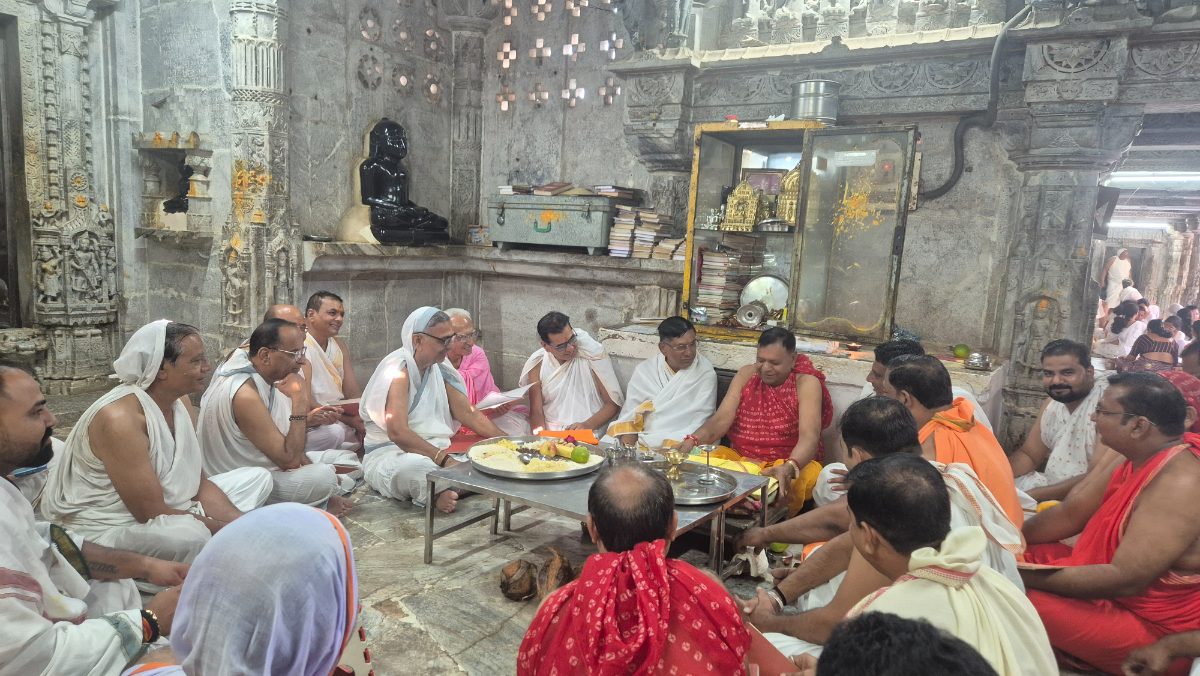
Image - Digambar Jain samaj performing Saraswati Pooja
Dashlakshan, Solahkaran, Panch Parmesthi and Sammed Shikhar Pooja
After the samaj-level rituals, people perform their own poojas according to their preference, whether it is Dashlakshan pooja, Solahkaran, Panch Parmesthi, or Sammed Shikhar pooja. Each person or family usually does this at their own level, in their own time, though many still gather together for it.
Kesar Pooja
Following these poojas, kesar pooja is offered. Given that this is Kesariyaji, kesar pooja naturally holds a special place here, more than it might at other kshetras.
Pratikraman with the Sant
If any sant is doing chaturmas in the village during this period, then in the evening pratikraman is held in their sanidhya. Having a sant present during Dashlakshan adds another layer to the whole experience, the guidance and discourse in the evenings make the days feel more complete.
Evening Aarti
In the evening the whole samaj again gathers at the nij mandir, this time for prabhu ki aarti. After a full day of pooja and abhishek, the evening aarti is when everyone comes together one final time before the day closes.
Sathiya at the Nau Chowki Vedi
After aarti, sathiya is placed at the main nau chowki vedi as well as the vedi below it. This is done on behalf of whoever's kalash and pooja is scheduled for the next day, so the sathiya essentially marks who will be leading the next morning's rituals.
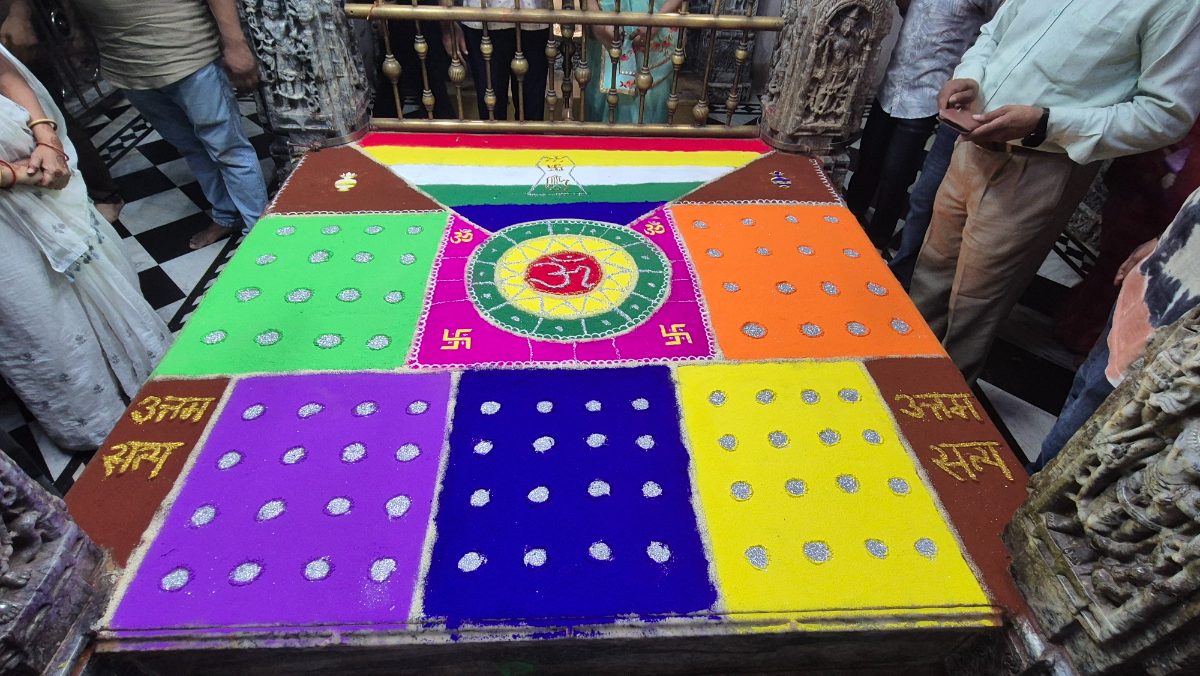
Image : Sathiya at nau chowki vedi
Kalash Yatra to the Purani Bawdi
The next morning, everyone sets out with band baaja, carrying the kalash and prabhu, to the purani bawdi located in the bagicha. Water is filled there for the kalash, and then everyone returns to the nij mandir. Back at the mandir, shanti dhara is performed along with pooja. If a sant is present during this period, a shivir is also organised in their presence, which many people look forward to.
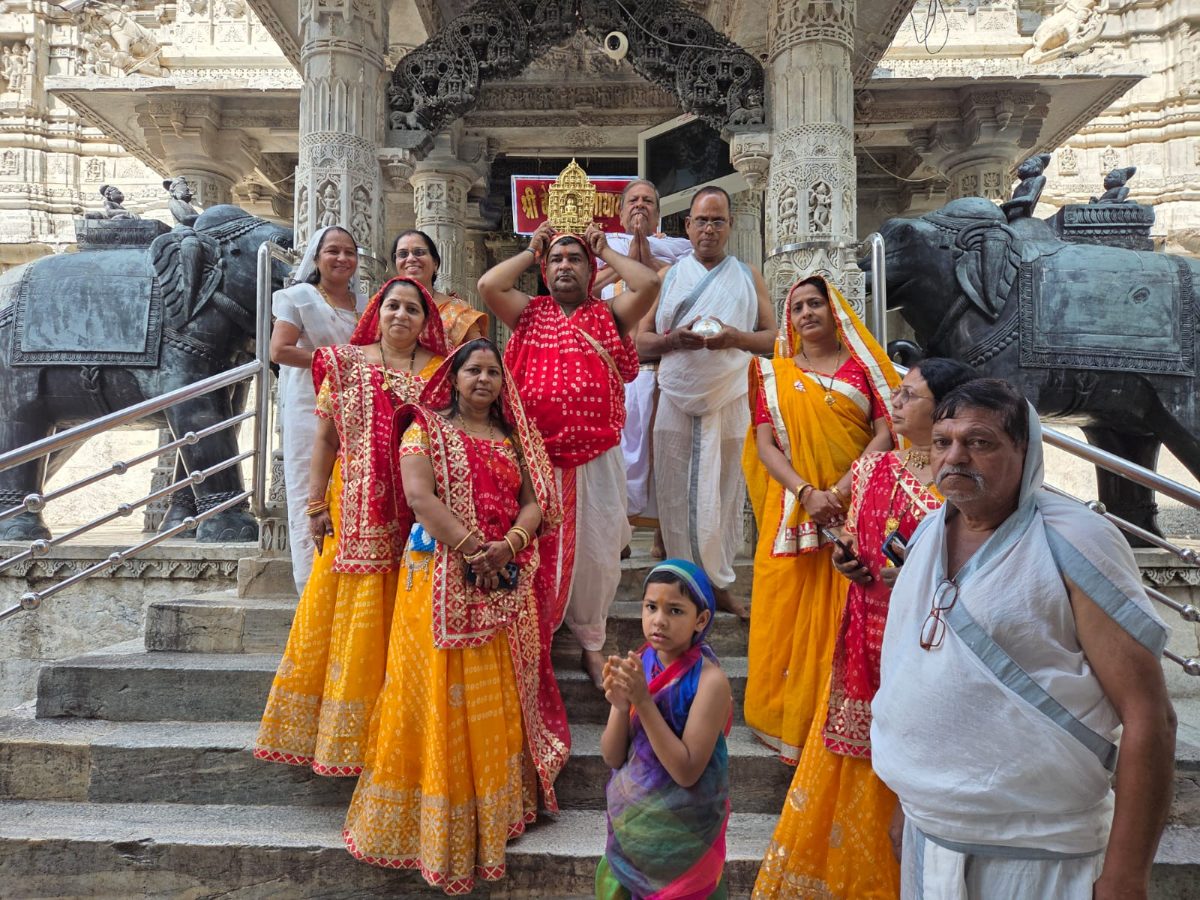
Image: Kalash Yatra to Purani bawdi
Dhoop Dashmi
On Dhoop Dashmi, the last day of the Parv, the samaj does dhoop first at the nij mandir, then moves to the kaanch ka mandir, then the gurukul, and finally the Mahavir Jinalay. This sequence of visiting all four places on the same day is what brings Dashlakshan Mahaparv to its close at Kesariyaji.
These ten days at Kesariyaji are not just about individual observance, they reflect how the whole samaj comes together, day after day, to keep this tradition alive at one of the most significant Digambar Jain atishay kshetras.